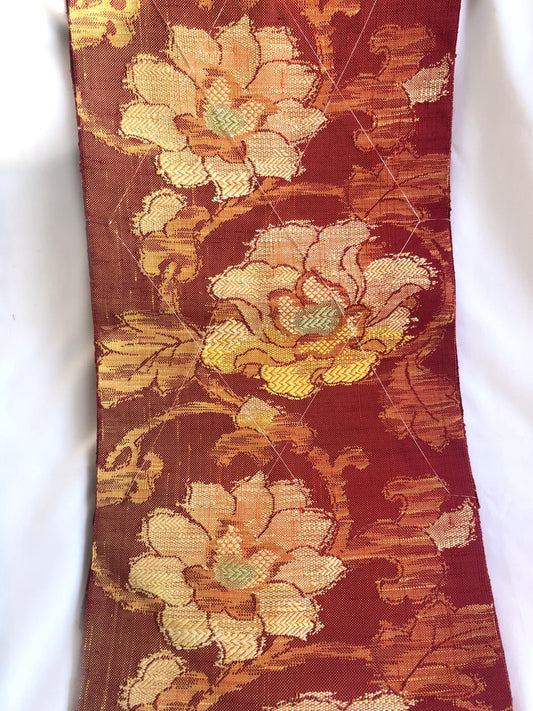
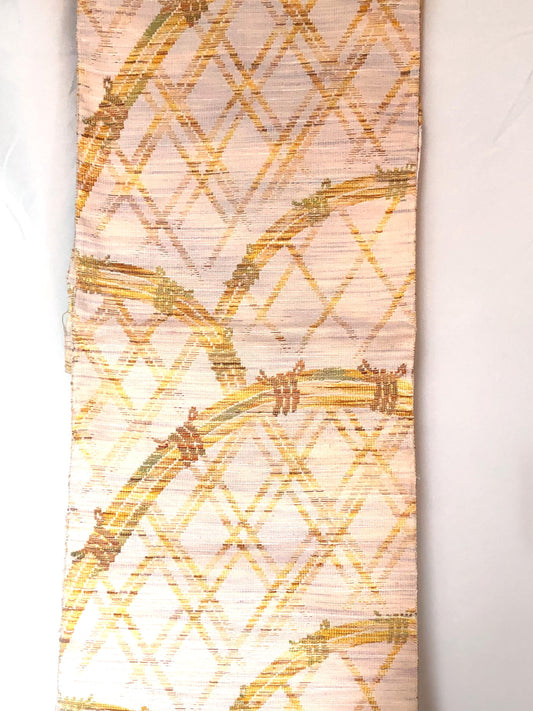
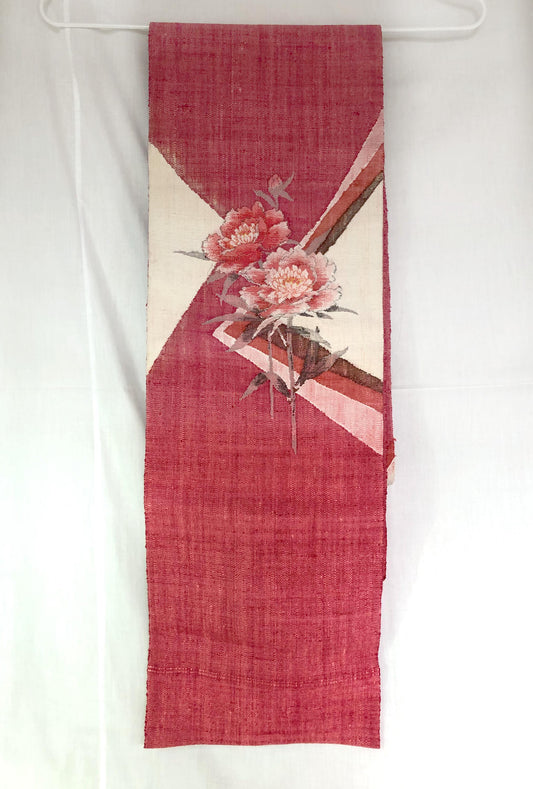
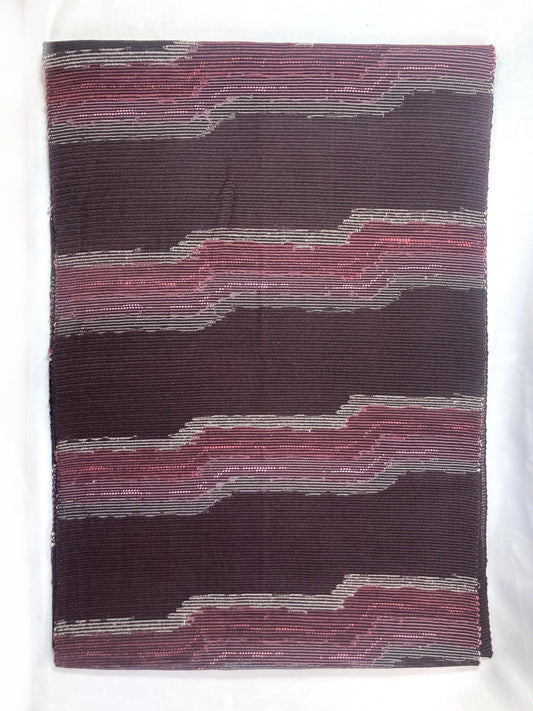
Collection: Nagoya Obi
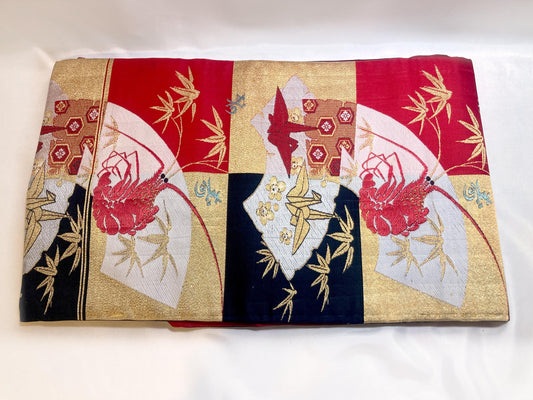
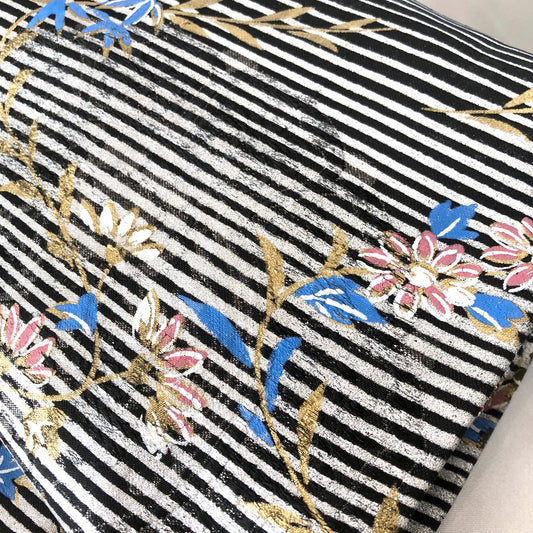
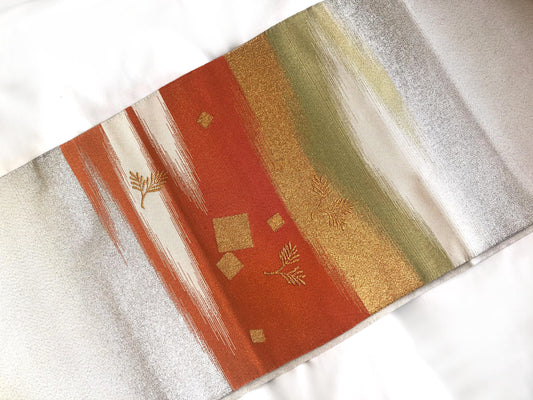
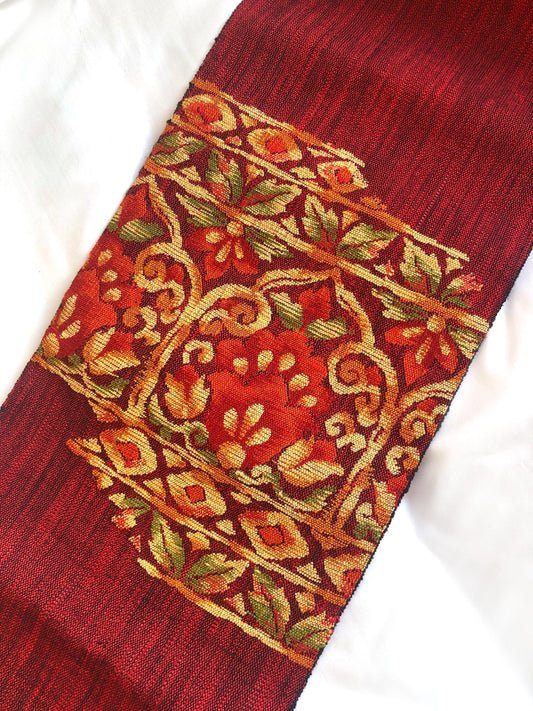
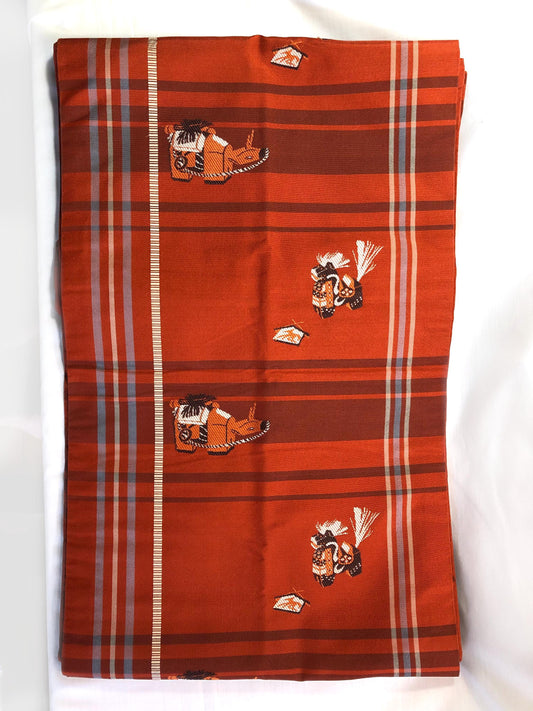
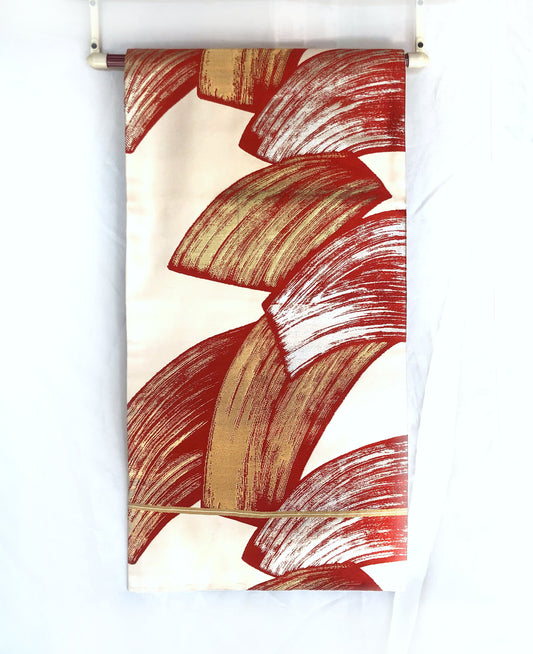
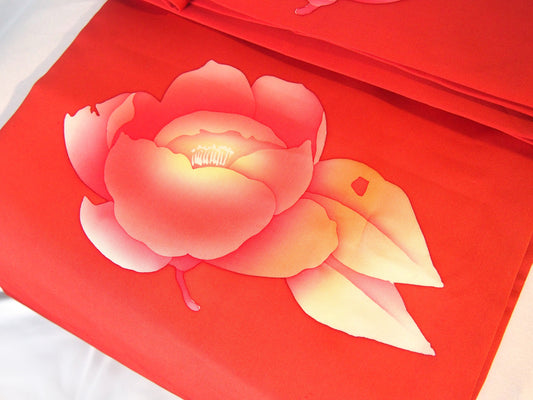
The Nagoya obi (名古屋帯) is currently the most commonly used type of obi. It is characterized by its unique structure: one end is folded and stitched in half, while the other end retains its full width. This design facilitates the process of wearing the obi. A Nagoya obi can feature either partial or full patterns. Typically, it is worn exclusively in the taiko musubi style, and many Nagoya obi are crafted with patterns concentrated in the section that will be most visible in the knot. In terms of length, Nagoya obi are shorter than other obi types, measuring approximately 315 centimeters (10.33 ft) to 345 centimeters (11.32 ft), while maintaining a consistent width of about 30 centimeters (12 in).
The Nagoya obi is a relatively recent innovation, created by a seamstress in Nagoya during the late 1920s. This new, user-friendly obi quickly gained favor among geisha in Tokyo, who then influenced its adoption by fashionable urban women for everyday attire.
The level of formality associated with a Nagoya obi is determined by its material, similar to other types of obi. Although the Nagoya obi was initially intended for casual wear, a version made from heavy brocade is deemed suitable for semi-formal occasions.